I-864 Question: Should Spouses file “Married, Filing Separate” or “Married, Filing Jointly”

Franchesco Fickey Martinez • March 17, 2025


This question of whether to file separately or jointly is extremely common with regard to the I-864 Affidavit of Support. The Answer actually differs depending on the situation. The common situations are as follows:

Scenario 1: Spouse is Illegal

The unauthorized and illegal income from an illegal spouse is NOT RECOGNIZED by US Immigration Agencies. It is like someone robbed a bank (crime) and then tried to put that illegal income onto the 1040 Tax Form.

What if the Spouses DID FILE JOINTLY? The tax forms would CONFUSE AND COMPLICATE an immigration filing. The US Immigration Agency (USCIS, NVC, or DOS Embassy/Consulate) would be required to verify any form of income displayed on the IRS 1040 Tax Return Filing. If there are forms of income that cannot be verified, expect issues and delays. If income is deemed illegal, the legal income would have to be proven generally by 3 years of tax returns, W2/1099, and 12 months of paychecks.

Generally, USCIS may require assets to supplement the I-864 Income Requirement. Assets could be equity in a house, a Savings Account or CD, or a retirement account. The Asset would create a secondary form of eligibility/ability to overcome the I-864 requirement.

Scenario 2: Spouse is legal, could be the intended immigrant or an I-864 household member

In this scenario, the tax returns and the immigration filing are benefitted by spouses filing “married, filing jointly.” This is because there would be less chance of an “overlap/increase” of income and the AGI on the one 1040 Tax Filing. One AGI would clearly communicate the taxable income for I-864 purposes. If married, it is generally recommended to file “married, filing jointly.”


If you are diving into this topic and have additional concerns, it might be ideal to speak with an immigration attorney. If you don't feel comfortable speaking with a lawyer, we recommend reviewing some of our additional Articles regarding the I-864:


Self-employed or Business Owner: www.fickeymartinezlaw.com/immigration/i-864-self-employment-and-business-ownership/

Joint Sponsorship:  www.fickeymartinezlaw.com/immigration/i-864-affidavit-of-support-joint-sponsor-guidance/

Using Assets:  www.fickeymartinezlaw.com/immigration/adjustment-of-status/i-864-asset-calculations/

Using VA Disability:  www.fickeymartinezlaw.com/immigration/va-disability-and-us-immigration/

Using SSDI:  www.fickeymartinezlaw.com/immigration/i-864-sponsorship-how-is-ssi-and-ssdi-assessed/


Lastly, many benefit from visualizing a complete checklist. Our recommendation can be seen here:  https://www.fickeymartinezlaw.com/immigration/immigration-checklist-what-our-law-office-generally-recommends


Have a quick question? Let us know!


Disclaimer:  This Blog is made available by the lawyer or law firm publisher for educational purposes only as well as to give you general information and a general understanding of the law, not to provide specific legal advice. By using this blog site you understand that there is no attorney-client relationship between you and the Blog/Web Site publisher. The Blog should not be used as a substitute for competent legal advice from a licensed professional attorney in your state.

By Franchesco Fickey Martinez July 3, 2026
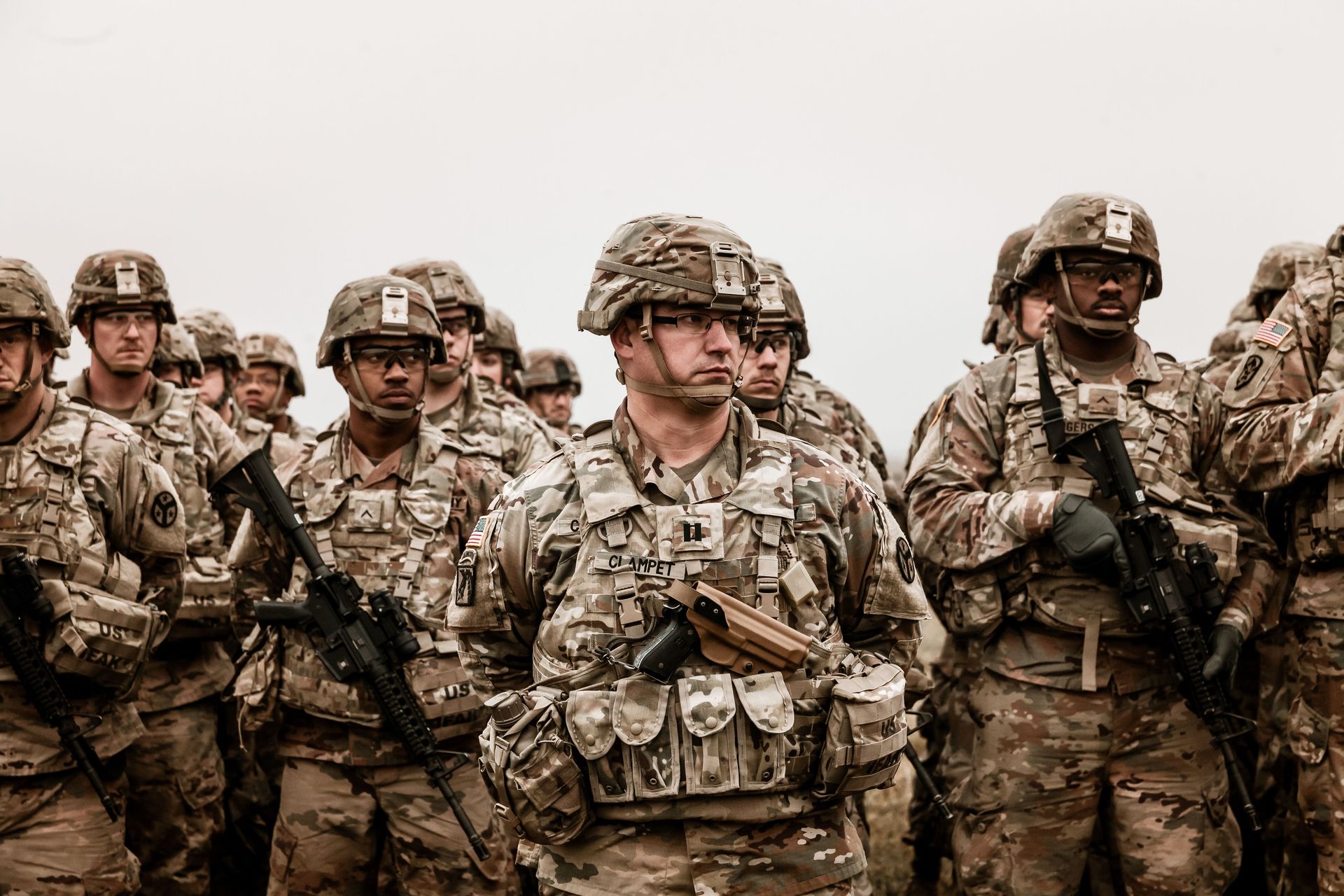
Based on our firm's experience handling INA §319(b) naturalization cases over the past decade, this guide is intended to help military families and qualifying U.S. government employees preparing for a naturalization interview at the Fairfax, Virginia (Washington, DC) USCIS Field Office. Although every case is unique and USCIS policies continue to evolve, the information below reflects recurring procedures, documentation requests, and practical recommendations that our office has observed during numerous §319(b) naturalization cases. 1. Why choose INA §319(b) instead of the traditional three-year marriage-based naturalization process? For many military families and qualifying U.S. government employees serving overseas, INA §319(b) offers significant logistical advantages. Unlike the standard three-year marriage-based naturalization process, INA §319(b): Does not require the applicant to satisfy the normal three-year continuous residence requirement. May allow biometrics to be completed outside the United States, depending on USCIS procedures at the time. Is generally processed on an expedited basis compared to standard naturalization filings. Often results in expedited oath ceremony scheduling because applicants typically need to return overseas shortly after naturalization. Another important advantage is location. The Fairfax, Virginia USCIS Field Office is located near Washington, D.C., where the U.S. Department of State operates a same-day emergency passport agency. Since a newly naturalized U.S. citizen must obtain a U.S. passport before traveling internationally as a U.S. citizen, this location can make post-naturalization travel considerably easier. 2. What types of government employment are commonly recognized under INA §319(b)? While eligibility is ultimately determined by USCIS and applicable law, we have commonly seen successful filings involving spouses of: Active Duty U.S. Military members Department of Defense (DoD) civilian employees Department of State (DOS) employees NATO employees serving in qualifying assignments 3. What additional documentation should applicants expect? One of the most common questions we receive is: "What documents should I bring beyond the normal naturalization requirements?" The answer has changed over the years. Some USCIS officers request only the documents necessary to establish eligibility, while others request substantially more supporting evidence. Our recommendation is to prepare for the more comprehensive review. Documentation we commonly recommend includes: Employment and Assignment Documentation DD Form 1278 executed at the time of filing Updated DD Form 1278 executed shortly before the naturalization interview Active Duty orders listing the spouse as accompanying, when applicable DD Form 1614 and DD Form 1617, if applicable Current government or military identification cards for both spouses SOFA documentation, when applicable Recent Leave and Earnings Statement (LES) or civilian pay statement confirming continued qualifying employment Command Certification We recommend obtaining a certification from the Commanding Officer (or appropriate supervisor) confirming: The qualifying government employment remains active. The assignment is expected to continue for at least one year. The applicant is authorized to accompany the government employee overseas. Many commands appreciate having a standardized template, which is why our office provides one separately. Applicant Statements Applicants should also be prepared to provide: A written statement confirming they intend to reside abroad with their government-employed spouse immediately after naturalization. Travel reservations, when available. A signed statement acknowledging they are applying under INA §319(b), remain married to the qualifying government employee, and understand USCIS may request additional documentation before approving the application. Additional Documentation Occasionally Requested Although not always requested, we have also seen USCIS request: Federal income tax returns covering all years of lawful permanent residence or prior U.S. residence DD Form 214 Previous military orders Historical SOFA documentation Prior U.S. visas Previous foreign passports, including biographic pages and visa pages Because documentation requests vary from officer to officer, we recommend bringing more documentation than you expect to need. 4. Will I Become a U.S. Citizen on the Same Day as My Naturalization Interview? Generally, no. After your naturalization interview, your case must complete several post-interview processing steps, including quality assurance review, supervisory approval, oath ceremony scheduling, and advance printing of your Certificate of Naturalization. At the Washington, DC Field Office, USCIS officers often advise applicants to allow one to three business days after the interview before an oath ceremony may be scheduled. While processing times vary, same-day naturalization ceremonies have generally not been conducted at this office since 2025. 5. When Should I Schedule an Expedited U.S. Passport Appointment? Based on prior procedures, applicants historically received an automated email reminder approximately three weeks before their scheduled naturalization interview explaining the passport application process and how to request an appointment with the Washington, DC Passport Agency. In most cases, expedited passport appointments are not available on short notice . Once you are within 14 days of your international departure and have confirmed travel (such as an airline ticket), you may request an expedited passport appointment. We generally recommend scheduling the appointment three to five days after your anticipated naturalization interview , if possible. Complete information regarding eligibility, appointment scheduling, required documentation, fees, office hours, and passport application procedures is available through the U.S. Department of State: https://travel.state.gov/en/passports/apply/get-fast/make-appointment/washington.html 6. Will the USCIS Officer Tell Me Whether My Case Is Approved at the Interview? Current USCIS policy (2026) generally provides that officers: Cannot provide their personal contact information or name. Cannot discuss internal case processing procedures or guarantee the outcome of your application. May inform you whether you successfully passed the English and civics tests. May advise that your case is being recommended for approval ; however, a recommendation is not a final approval, nor does it guarantee immediate processing or scheduling of your oath ceremony. 7. Must My Spouse Attend the Naturalization Interview if They Are the Qualifying Government Employee? Practices vary by USCIS officer. Some officers may request that the qualifying spouse attend the interview, while others may permit only the lawful permanent resident applicant to enter the interview room. When possible, we recommend that both spouses attend the appointment . If the qualifying government employee or service member cannot attend because of official employment obligations, a signed letter explaining their absence is recommended. If the officer has questions regarding the qualifying government employment, military service, or anticipated future employment, those questions are often most easily answered by the government employee or service member directly. Although USCIS officers are federal employees, they may not be familiar with the policies, documentation, and procedures of every federal agency, including the Department of Defense (DOD), Department of State (DOS), military branches, or NATO. Each agency and military branch maintains its own procedures and documentation requirements. 8. How Long Should I Plan to Stay in the Washington, DC Area? We generally recommend planning to remain in the Washington, DC metropolitan area for approximately five business days (one full week) . This provides flexibility should your oath ceremony be scheduled several days after your interview, as well as provide sufficient time for the DOS Passport Office to process the Same-day Passport Application of the new US Citizen. 9. What Is the Best Way to Travel to and Around the Washington, DC Area? For applicants traveling from the U.S. East Coast, air travel or Amtrak are both convenient options. Applicants traveling from the Midwest, West Coast, or overseas will generally find air travel to be the most practical choice. While in the Washington metropolitan area, we strongly recommend using the Washington Metro . It is typically less expensive than rideshare services or taxis and provides convenient transportation throughout the region. The USCIS Washington, DC Field Office is located in Fairfax, Virginia , within walking distance of the Dunn Loring–Merrifield Metro Station on the Orange Line. Metro information is available at: https://www.wmata.com/ 10. Are There Food Options Near the USCIS Field Office? Yes. We strongly recommend eating breakfast, brunch, or lunch before your interview. Interview processing times can vary, and being well-fed can make the experience considerably more comfortable. Several restaurants are located within walking distance of the field office, including: Casual Pint – American cuisine, burgers, sandwiches, and craft beer Jersey Mike's Subs – Sandwiches Grove – Poke bowls District Taco – Mexican cuisine Rasoi Indian – Indian cuisine Kiin Imm Thai – Thai cuisine Japomen Vienna – Japanese cuisine Lastly, Is There a Hotel Within Walking Distance of the USCIS Washington, DC Field Office? Several hotels are available in the nearby Merrifield area. For applicants seeking accommodations within a short walking distance of the field office, we recommend: Courtyard by Marriott Dunn Loring Fairfax 2722 Gallows Road Vienna, VA 22180 https://www.google.com/travel/hotels/s/NoVpgAzJuCqQwUcXA While our office cannot address every individual question or circumstance, we have extensive experience with INA § 319(b) (N-400) naturalization cases and are often able to provide guidance beyond what is typically available. If you have additional questions, we may be able to assist you by telephone or email. Disclaimer: This Blog is made available by the lawyer or law firm publisher for educational purposes only as well as to give you general information and a general understanding of the law, not to provide specific legal advice. By using this blog site you understand that there is no attorney-client relationship between you and the Blog/Web Site publisher. The Blog should not be used as a substitute for competent legal advice from a licensed professional attorney in your state.

By Franchesco Fickey Martinez July 2, 2026
Form DD-1278 is the Certificate of Overseas Assignment to Support an Immigrant's Application to File for US Naturalization under INA 319(b) and INA 319(e). Form DD-1278 must be completed and signed by the commanding officer. The commanding officer certifies that the applicant has: (1) “concurrent travel orders” and (2) is authorized to join their Active Duty Military/Government Employee spouse abroad. The Form DD-1278 can be used for filing scenarios covering a spouse (most common) OR a minor child (in very limited circumstances). Form DD1278 can be signed by black wet-ink or digitally with Adobe. The form is available below for easy locating.
By Franchesco Fickey Martinez May 7, 2026
DACA Renewals are delayed in 2026. A renewal 2 years ago took 2 weeks to 2 months to complete. However, now DACA Recipients are seeing delays exceeding 120-days and 150-days. What is likely the cause? Effective December 12, 2025, USCIS updated its biometric policy, limiting photo reuse to 3 years (36 months) for immigration benefits. Now, DACA Holders must have a biometric appointment to update photo, fingerprints, and signature samples. With a new set of fingerprints, a background check SHOULD occur just as quick as 2 years ago. However, the opposite has occurred. Now the background checks are delaying, USCIS officers have double the material needed to timely complete a background check, but more does not always mean best. USCIS systems have been encountering technical complications throughout 2025 and now into 2026 that slows done simple tasks like: - opening a PDF - opening a file - completing a task - creating a USCIS Notice The Biometric Policy started to add extra items into filings, which (when coupled with a USCIS that has had technical issues), has made USCIS Officers work much more slowly and only be able to review/process a reduced amount of cases versus at the rate of workflow from prior to the USCIS Policy Change. What to do in response? USCIS Recommendation is to file DACA renewals within 150-120 days from expiration. To be safe: file at the 150-day mark, AND attend your Biometric appointment timely or attempt to attend right when the Biometric Notice is in hand (as many ASC facilities will happily entertain the biometric appointment early). USCIS does NOT Recommend filing earlier than 150 days. The Note directly from the USCIS Website states: Please note that filing earlier than 150 days before your current DACA expiration date will not result in a faster decision. Disclaimer: This Blog is made available by the lawyer or law firm publisher for educational purposes only as well as to give you general information and a general understanding of the law, not to provide specific legal advice. By using this blog site you understand that there is no attorney-client relationship between you and the Blog/Web Site publisher. The Blog should not be used as a substitute for competent legal advice from a licensed professional attorney in your state.

By Franchesco Fickey Martinez January 30, 2026
The most common request in estate planning is a Simple Will. Someone going to an estate planning attorney, and just wanting what they want. This article will cover the commonly overlooked matters. The best way to approach this subject is with a scenario: Jack is married to Jill, and they have two kids over the age of 18. Jack wants to leave everything to his wife and Jill everything to her husband. Simple! The items that complicate: What is being left? The home Jack and Jill live in Rental Property Retirement accounts, such as an IRA, 401(k), 403(b), HSA, and Pension Bank Accounts Vehicles Stock Portfolios ^ If the above are the items that complicate, what goes easily with a simple will? Keepsakes, Jewerly, Momentos, Cash in hand, assets NOT already set up to transfer automatically, etc. Lets break each item into HOW it complicates: The home Jack and Jill live in Everything depends on who the house is deeded to! Many spouses may acquire the home prior to marrying, having only one spouse on the deed. Alternatively, if one spouse is unemployed at time of home purchase, the working spouse may be the only spouse on the deed. A property deeded to BOTH spouses, JOINT, "with rights of survivorship" is the BEST scenario. A will and probate court is not necessary. Rental Property Rental properties may be in one spouse's name OR the property may be deeded to a business, that is only "owned" by one spouse. The issue, the Will is for a Person, it would not directly affect a rental owned by a business. Retirement accounts, such as an IRA, 401(k), 403(b), HSA, and Pension The accounts are owned "individually," by one spouse or the other. A will and probate court is not necessary BECAUSE each retirement account already has a "Designated Beneficiary." Bank Accounts A bank account might ALREADY transfer at death, if a TOD/POD arrangement was set up, making a Will not necessary. Automatic transfer is more ideal than Slow Transfer in Probate Court. The bank account may also be a JOINT ACCOUNT, making the spouse able to immediately access. Vehicles Always a pain to do anything with the DMV! Stock Portfolios The Stock Portfolio are either owned "individually" or "jointly." A will and probate court is not necessary BECAUSE each Stock Portfolio already has a "Designated Beneficiary." What if the Simple Will says one thing and the asset says another? For instance, a Retirement Account has 1 child as the Beneficiary upon Jack's Death. The Simple Will stated to leave EVERYTHING to Wife, Jill. What happens? the 1 child receives the retirement account as it was created while Jack was alive and takes priority. The Will "activates" later in Probate Court, but the retirement account would already belong to the 1 child. What should I do then? Do a Simple Will, HOWEVER consider a review of all Asset Beneficiary Designations. A Simple Will is not the end-all, be-all solution. It is the weakest of Estate Planning/Probate tools. Apart from Asset Beneficiary Designation, consider alternatives, such as a: Trust, great location for a home, life insurance proceeds, managing retirement accounts for those left befind, etc. Updating the Deed to a home or doing a pour-over will Adjust business holdings, especially those that are income producing What are complications to the Family Structure in the above scenario: If both Spouses pass at the same time, and they leave all items to one child over the other. If one spouse wishes to leave everything to one child versus the other If one spouse wishes to leave everything to the other spouse "for the living spouse's life," then then to one or both children If one spouse adds Siblings into their estate planning, or a sibling's children.  Disclaimer: This Blog is made available by the lawyer or law firm publisher for educational purposes only as well as to give you general information and a general understanding of the law, not to provide specific legal advice. By using this blog site you understand that there is no attorney-client relationship between you and the Blog/Web Site publisher. The Blog should not be used as a substitute for competent legal advice from a licensed professional attorney in your state.
By Franchesco Fickey Martinez January 26, 2026
This is a common question every tax season for any person that has a pending Immigration Filing that required an I-864 affidavit of support. The question could be posed a number of ways: Should I update my I-864 with new Tax Information? I have a new W-2/1099, should that be reflected in the I-864? I did better financially last year, would it benefit updating the I-864? I changed jobs a few months ago, is now a good time to update the I-864 with new financial information? I filed a new 1040 Tax Return and my AGI is different, is that going to be needed? In a short answer, USCIS and NVC should be updated with any new financial document from a Sponsor, regardless if it is requested by the immigration official or given as unsolicited evidence. Common documents to provide/update between January 1st to April 15th of every year are: For Employees: W-2 1040 Tax Return 6+ months of paystubs, especially the last paystub for the prior year IRS Tax Return Transcript, if available For Contractors: 1099 1040 Tax Return Any Tax Schedules covering profits, losses, and expenses/write offs 6+ months of paystubs, especially the last paystub for the prior year IRS Tax Return Transcript, if available For Self-Employed/Business Owners: 1099 or W-2 1040 Tax Return Any Tax Schedules/Form K covering profits, losses, and expenses/write offs Bookkeeping Records Any Tax Filings from the prior year, possibly quarterly filings or a Tax Extension for the most recent tax year entire prior years worth of income proof, possible the business operating back account statements IRS Tax Return Transcript, if available For Retirees/Veterans/Retire-Early FIRE Individuals: Stock/Real Estate Portfolio Statements 1099 forms Distribution Statements Annual Monthly Rate for the Tax Year VA Disability Statement for the Year SSD Statement for the Year 12 months of Bank Statements Do you need to submit a new I-864? Possibly "No." The more updated evidence provided, that is the main focus as it showcases continued financial stability. An updated I-864 "summarizes" what was the Taxable Income OR Adjusted Gross Income OR Non-taxable Income. Should you update the financial documentation? Yes, whenever possible.  Disclaimer: This Blog is made available by the lawyer or law firm publisher for educational purposes only as well as to give you general information and a general understanding of the law, not to provide specific legal advice. By using this blog site you understand that there is no attorney-client relationship between you and the Blog/Web Site publisher. The Blog should not be used as a substitute for competent legal advice from a licensed professional attorney in your state.

By Franchesco Fickey Martinez January 23, 2026
On December 2, 2025, USCIS Policy Memorandum (PM-602-0192) titled: Hold and Review of all Pending Asylum Applications and all USCIS Benefit Applications Filed by Aliens from High-Risk Countries, was published. The Policy had three (3) Goals: Place a hold on all Forms I-589 (Application for Asylum and for Withholding of Removal), Place a hold on pending benefit requests for aliens from countries listed in Presidential Proclamation (PP) 10949 Conduct a comprehensive re-review of approved benefit requests for aliens from countries listed in PP 10949 who entered the United States on or after January 20, 2021. 38 Countries are directly affected by this policy pause, and the list is as follows: Afghanistan Angola Antigua and Barbuda Benin Burma (Myanmar) Burkina Faso Burundi Chad Cuba Cote d'Ivoire Republic of the Congo Dominica Equatorial Guinea Eritrea Gabon The Gambia Haiti Iran Laos Libya Mali Malawi Mauritania Niger Nigeria Sierra Leone Somalia South Sudan Sudan Syria Senegal Tanzania Togo Tonga Venezuela Yemen Zambia Zimbabwe This Policy Memo Directly affects: Form I-485 (Application to Register Permanent Residence or Adjust Status), Form I-90 (Application to Replace Permanent Resident Card (Green Card)), Form N-470 (Application to Preserve Residence for Naturalization Purposes), Form I-751, (Petition to Remove Conditions on Residence), and Form I-131 (Application for Travel Documents, Parole Documents, and Arrival/Departure Records). Additionally, if pausing Green Card-related functions, Naturalization and Citizenship Benefits may also be slightly affected, as they build on lawful permanent residence and Aliens naturalizing in 2026 may have entered after January 20, 2021. This Policy Memo is only "active" for a 90-day period, and set to expire around the end of February. The Memo states: USCIS will prioritize a list for review, interview, re-interview, and referral to ICE and other law enforcement agencies as appropriate, and, in consultation with the Office of Policy and Strategy and the Fraud Detection and National Security Directorate, issue operational guidance. The USCIS Policy Memo can be seen here for reference:
By Franchesco Fickey Martinez January 15, 2026
US Immigration Bans have been a common occurance in recent decades. The first fact is that "Bans" change, the list of countries can change quickly. The January 14, 2026 US Immigration Ban changed/or added to the January 1, 2026 US Immigration Ban List. A matter of 2 weeks and the list of countries went from 39 to 75. Now, no one can see the future. The listed countries can be added and removed without prior notice. And, possibly the biggest misnomer, can a country listed on the "Ban List" still immigrate? The answer is: possibly, it depends. The policies change frequently, but if we turn to history, the following were common: exemptions for special classes of immigrants, like spouses of US Citizens and Parents/Children of US Citizens. extra vetting for banned countries, like how the DS-5535 was utilized in 2019 Here are a few examples of past Immigration Bans: https://www.fickeymartinezlaw.com/immigration/k-1-fiance-visa/k-1-fiance-visas-are-they-banned-in-2020 https://www.fickeymartinezlaw.com/immigration/summary-of-the-april-23-2020-60-day-immigration-ban-by-proclamation-proclamation-suspending-entry-of-immigrants-who-present-risk-to-the-u-s-labor-market-during-the-economic-recovery-following-the-covi At the writing of this article, details are lacking, exemptions are not explained, and vetting procedures are still being drafted. What we do know is the list of countries being affected for the time being: Afghanistan Albania Algeria Antigua and Barbuda Armenia Azerbaijan Bahamas Bangladesh Barbados Belarus Belize Bhutan Bosnia Brazil Burma Cambodia Cameroon Cape Verde Colombia Cote d’Ivoire Cuba Democratic Republic of the Congo Dominica Egypt Eritrea Ethiopia Fiji Gambia Georgia Ghana Grenada Guatemala Guinea Haiti Iran Iraq Jamaica Jordan Kazakhstan Kosovo Kuwait Kyrgyzstan Laos Lebanon Liberia Libya Macedonia Moldova Mongolia Montenegro Morocco Nepal Nicaragua Nigeria Pakistan Republic of the Congo Russia Rwanda Saint Kitts and Nevis Saint Lucia Saint Vincent and the Grenadines Senegal Sierra Leone Somalia South Sudan Sudan Syria Tanzania Thailand Togo Tunisia Uganda Uruguay Uzbekistan Yemen Additionally, we know that the Embassies and Consulates have been instructed to STOP processing, interviewing, and approving immigrant visas from the affected countries AT THIS TIME. If you would like assistance in an immigration matter, please contact our office to set up a consultation with our immigration attorney. Disclaimer: This Blog is made available by the lawyer or law firm publisher for educational purposes only as well as to give you general information and a general understanding of the law, not to provide specific legal advice. By using this blog site you understand that there is no attorney-client relationship between you and the Blog/Web Site publisher. The Blog should not be used as a substitute for competent legal advice from a licensed professional attorney in your state.

By Franchesco Fickey Martinez December 4, 2025
Time! That is the short answer. The US Citizen will save time. Lets find the starting line of this topic. A US Citizen meets a filipina or filipino. They fall madly in love. Beautiful! The US Citizen will eventually come to the realization that a PLAN needs to be created. If the US Citizen wants the future spouse to immigrate to the US, plan, plan, plan. The most important part of any plan is the time element. Marrying takes time. In the US, we get a marriage license today, and can marry today. Think of the Las Vegas Marriages we always hear about, or what many call eloping. This is NOT the case abroad. Many countries require the US embassy to give foreign permission of a US Citizen to marry abroad. Lets be specific to the Philippines. In the Philippines, you need time, and time INSIDE of the Philippines. Imagine flying over 24 hours to the Philippines and having to tackle all of the following: Finally getting to hold your Fiancee/Girlfriend (Fun Item) You get to eat some more of the good Filipino Food (Fun Item) Your Fiancee (you might go too or they acquire PRIOR to your arrival) goes the PSA to get their CENOMAR, certificate of no marriage (Not Fun Item) You, the US Citizen, must go to an appointment (2 weeks advance planning needed) at the US Embassy or Consulate for something similar to the CENOMAR (Not Fun Item) Both Fiances, now you apply for the Marriage License, NOT the license yet, just the application to get the license. [Philippine law requires a ten-day waiting period from the filing of the application to the issuance of the marriage license. These ten (10) days are business days, not counting weekends or holidays.] Marriage License is finally in hand 2-3 weeks later Then, you are finally married. US Citizens usually require a minimum of 4-6 weeks IN THE PHILIPPINES, in order to tackle all of the Philippine Requirements. TIMING, lets return to that topic. Most US Citizens considering marrying in the Philippines, will plan or push off a marriage for months or 1-2 years. A 1-2 month trip abroad is a BIG commitment. Takes a lot of planning. Financially, costs a lot. - Now, to the topic at hand, Utah Virtual Marriage Option allows the US Citizen to marry almost instantly. You can marry while you are abroad in the Philippines or another country. The US Citizen can even marry while still in the US, and then fly to see their new spouse and go on a honeymoon. Timing is in the US Citizen's favor. The PLAN can be more focused on the relationship, having fun, enjoying the Philippines, versus running around to government buildings to slowly become married. Now, What is the Catch? There are 4 catches. First, for US Immigration purposes, USCIS REQUIRES after 2024/2025 the spouses to meet in person after marrying virtually and before filing the I-130. Now, if both spouses are in the Philippines during the virtual marriage, which we HIGHLY RECOMMEND, the in-person meeting is easily met. Why do we highly recommend marrying virtually while in the same country? Because it means more to the spouses, to family, and when the officiant says: You may now kiss the bride, you really want to be in person for the once-in-a-lifetime moment. Now, you can marry while separated, but before you start any I-130 filing, you MUST MUST MUST go meet in person first. Second, PLAN a renewal of vows, either back in the US or in your desired church. It is not a mandatory item, but a formality that is appreciated by friends and family. Third, REGISTER THE MARRIAGE! The process is seen here: https://www.fickeymartinezlaw.com/utah-virtual-marriage-and-the-philippines-psa-the-report-of-marriage-rom-process Fourth, consider changing the wife's name to the married name shortly after marriage. Don't wait for a few days before or after the visa interview. If the Philippine passport is updated to the married name, then the Immigration visa/Green Card will be updated to the married name. Consider reviewing our other popular Philippine Article: https://www.fickeymartinezlaw.com/immigration/consular-processing/us-citizens-guide-to-marrying-in-the-philippines-and-immigrating-a-philippine-filipina-spouse-to-the-united-states  Disclaimer: This Blog is made available by the lawyer or law firm publisher for educational purposes only as well as to give you general information and a general understanding of the law, not to provide specific legal advice. By using this blog site you understand that there is no attorney-client relationship between you and the Blog/Web Site publisher. The Blog should not be used as a substitute for competent legal advice from a licensed professional attorney in your state.

By Franchesco Fickey Martinez November 14, 2025
The J1 Visa is an amazing cultural exchange visa for foreign professionals seeking to acquire US Experience within their profession. Many J1 professionals may find themselves SUBJECT to the INA 212(e) Special Skills List. This article will display the Subject/Field Codes that are SUBJECT for any J1 that is a Jamaican Citizen.
By Franchesco Fickey Martinez November 13, 2025
US Citizenship can be derived in a child from a US Citizen Father. The process of a father giving US Citizenship to a child comes in a few different ways. The main determining factor is whether the Father was married to the Mother at time of birth or not? Wedlock and Out-of-Wedlock Distinction: Whether a father is married or unmarried determines the ultimate requirements on whether a child derives US Citizenship from a Father. Unmarried/Our-of-Wedlock Requirements: More requirements exist for births that occur outside of a marriage. The US Government would require to see for births on/after 11/15/71: Child/father blood relationship established by clear and convincing evidence; Father must have been a U.S. citizen at the time of child’s birth; Father, unless deceased, must provide written statement under oath that he will provide financial support for child until s/he reaches 18; While child is under age 18, child must be legitimated under law of child’s residence or domicile, or father must acknowledge paternity in writing under oath, or paternity established by competent court. US Residence Requirement: Both parents are US citizens : One had resided in the U.S. or its outlying possessions for any period of time. One US citizen and one US national parent : Citizen had been physically present in U.S. or its outlying possessions for continuous period of 1 year. One Parent is a US citizen, one parent is a noncitizen parent : had been physically present in U.S. or its outlying possessions 5 years, at least 2 of which were after age 14. Married/In-Wedlock Requirements: Less requirements exist for births that occur inside of a marriage. The US Government would require to see for births on/after 11/14/1986: US Residence Requirement: Both parents are US citizens : One had resided in the U.S. or its outlying possessions for any period of time. One US citizen and one US national parent : Citizen had been physically present in U.S. or its outlying possessions for continuous period of 1 year. One Parent is a US citizen, one parent is a noncitizen parent : had been physically present in U.S. or its outlying possessions 5 years, at least 2 of which were after age 14. Why does marriage matter? A marriage legitimizes the birth of a child abroad. Legitimation is a legal concept that exists in the US and is a common concept that exists in foreign countries. The child tends to be the product OF THE MARRIAGE (when the parents are married to one another) versus being from random people or by people in a relationship that haven't reached the level of marriage. What Form or Forms utilize this information? Both the USCIS and DOS utilize the above information. For USCIS, it is processed in the N-600 filing and for DOS it is in the CRBA/Consular Report of Birth Abroad.  Disclaimer: This Blog is made available by the lawyer or law firm publisher for educational purposes only as well as to give you general information and a general understanding of the law, not to provide specific legal advice. By using this blog site you understand that there is no attorney-client relationship between you and the Blog/Web Site publisher. The Blog should not be used as a substitute for competent legal advice from a licensed professional attorney in your state.