Registering to Vote in NC and the N-400 Naturalization

Franchesco Fickey Martinez • November 6, 2026

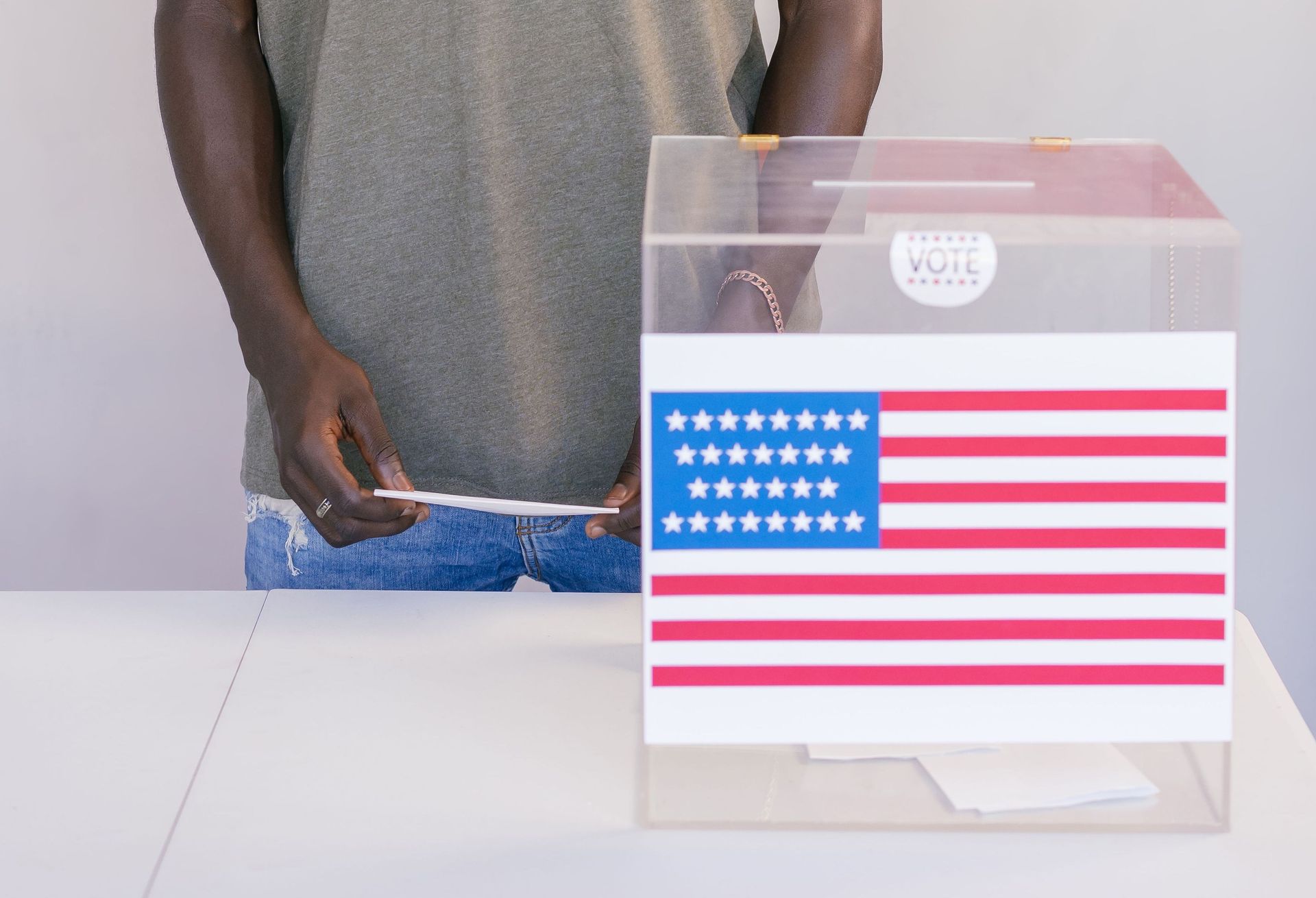
This is an important issue in naturalization cases because registering to vote as a non-U.S. citizen can create serious immigration consequences, even if the individual never actually casts a ballot.


For an N-400 applicant, the circumstances surrounding the registration, the applicant's knowledge, and whether the applicant actually voted are very important.


NC Voter Registration can be seen here: https://vt.ncsbe.gov/RegLkup/ [Note: Misspelled Names, aliases, and nicknames can be registered and are normally linked to your address or social security number.]


NC Statutes and NC Voter Registration:


Relevant North Carolina statutes include:

  • N.C. Gen. Stat. § 163-82.4: Establishes requirements for voter registration applications, including the citizenship question and prohibition against applications by persons ineligible because of citizenship.
  • N.C. Gen. Stat. § 163-82.19: Addresses voter registration through the DMV and requires the DMV to ask whether the applicant is a U.S. citizen.
  • N.C. Gen. Stat. § 163-275: Identifies certain election-related violations as Class I felonies.


North Carolina specifically instructs DMV personnel to inform noncitizens that applying to register to vote is a felony.


At time of Voter Registration, the NC Voter Registration Application asks:

  • Are you a citizen of the United States of America?
  • Will you be 18 years of age on or before election day?


Individuals registering to vote must sign the application, under penalty of perjury, that they are U.S. citizens. The language above the signature box states:


“Fraudulently or falsely completing this form is a Class I felony under Chapter 163 of the N.C. General Statutes.” (https://www.ncleg.gov/EnactedLegislation/Statutes/HTML/BySection/Chapter_163/GS_163-275.html)


The federal immigration consequences:


There are three particularly important provisions of the Immigration and Nationality Act.


A. False claim to U.S. citizenship — INA § 212(a)(6)(C)(ii)


A noncitizen who falsely represents themselves to be a U.S. citizen for a purpose or benefit under federal or state law may become permanently inadmissible.


A false claim can arise in connection with voter registration.


B. Deportability for falsely claiming citizenship — INA § 237(a)(3)(D)


A noncitizen who falsely represents themselves as a U.S. citizen can also become deportable.

This is particularly significant because the issue is not limited to whether USCIS approves or denies the N-400.


Under its August 29, 2025 policy alert, USCIS announced that it would issue Notices to Appear (NTAs) for false claims of U.S. citizenship.


See: https://www.uscis.gov/sites/default/files/document/policy-manual-updates/20250829-VoterRegistrationGMC.pdf


USCIS considers an alien to have falsely claimed to be a U.S. citizen, if the alien affirmatively indicates that he or she is a U.S. citizen.


If the alien registered to vote, the alien has the burden to prove that the registration form did not contain a question about whether the alien is a U.S. citizen or that the alien did not indicate, in response to such a question, that he or she is a U.S. citizen. 


HOWEVER, at time of Voter Registration, the NC Voter Registration Application asks:


Are you a citizen of the United States of America?


This makes a very harsh hurdle for Lawful Permanent Residents that registered to vote in North Carolina. N-400 Naturalization is NOT RECOMMENDED for any noncitizen that registered to vote in NC due to the False Claim Issue and USCIS's August 29, 2025 policy on this issue.


C. Unlawful voting — INA § 237(a)(6)


Actually voting in violation of federal, state, or local election law creates a separate deportability issue.


The important distinction: Registering to vote and actually casting a ballot are separate immigration issues. A person who registered but never voted does not automatically fall under the unlawful-voting provision merely because of the voter registration.


Should you file for N-400 if you have ever registered to vote in NC?


No! N-400 Naturalization is NOT RECOMMENDED for any noncitizen that registered to vote in NC due to the False Claim Issue and USCIS's August 29, 2025 policy on this issue. The Felonious act has already occurred and mandatory deportation is possible. Please review USCIS's August 29, 2025 policy on this issue.


August 29, 2025 USCIS Policy Alert


What if the Registration occurred before 2025 and the registration was the DMV's error?


Be cautious! Although the DMV may have made an error between 2006 and 2025, the noncitizen should have discovered the erroneous registration and taken steps to be removed from NC Voter Registration before 2025.


Should I remove my registration from the NC Voter Registration System if I should be there?


Yes, and it can be completed by using the Cancelation of Voter Registration Form: https://s3.amazonaws.com/dl.ncsbe.gov/sboe/forms/Cancellation%20of%20Voter%20Notice.pdf


2026 NC Actions to Remove Noncitizens from NC Voter Registrations:


The North Carolina State Board of Elections has identified many potential non-U.S. citizens through the federal Systematic Alien Verification for Entitlements (SAVE) database. SAVE is a federal database used by government agencies to verify immigration and citizenship status. On September 25, 2026, the U.S. Supreme Court issued a ruling allowing continued use of the SAVE database for voter list maintenance purposes.

2026 Letter from NC Board of Elections


Disclaimer: This Blog is made available by the lawyer or law firm publisher for educational purposes only as well as to give you general information and a general understanding of the law, not to provide specific legal advice. By using this blog site you understand that there is no attorney-client relationship between you and the Blog/Web Site publisher. The Blog should not be used as a substitute for competent legal advice from a licensed professional attorney in your state.

By Franchesco Fickey Martinez • November 6, 2026
Failure to register with the Selective Service System can become an issue during the N-400 naturalization process. However, there are policies and exceptions dependent on particular circumstances. Failure to register does not automatically disqualify everyone from becoming a U.S. citizen, but it can delay someone’s ability to Naturalize by a few years. The important questions are: Was the applicant legally required to register? Was the applicant within the registration age range? Was the failure to register knowing and willful? USCIS evaluates Selective Service compliance primarily in connection with the statutory requirement of demonstrating good moral character (GMC) in order to be eligible to become a US Citizen. Did you register? Selective Service Verification can be seen here: https://www.sss.gov/verify/ 1. Who is required to register? Under the Military Selective Service Act, most male U.S. citizens and male immigrants residing in the United States MUST register with Selective Service between their 18th and 26th birthdays. This Registration requirement applies to: Male U.S. citizens born in the US or acquired thereafter by operation of law. Male Lawful permanent residents (aka green card holders). Male Refugees and asylees. Male Undocumented immigrants residing in the United States. Male DACA Recipients. Certain other male nonimmigrants who are no longer maintaining lawful nonimmigrant status (aka some visa overstays, such as Tourist Visa, Student Visa, Employment Visa, etc.). The registration requirement generally does not apply to: Females. Men who are continuously in the United States on valid nonimmigrant status throughout the relevant period. Men who entered the United States after their 26th birthday . Men who were born before January 1, 1960. Certain individuals who were institutionalized or otherwise exempt during the relevant period. 2. How USCIS evaluates failure to register The primary concern is whether the applicant knowingly and willfully failed to register. A Naturalization Applicant generally must establish good moral character during the five years preceding the N-400 filing. There are two particularly important situations. Scenario A: Failure to register before age 26 If the applicant failed to register but is still under age 26, the applicant should register immediately, if legally required. Recall, Male Lawful permanent residents (aka green card holders) are legally required to register. Scenario B: Failure to register after turning 26 If the applicant is already 26 or older, registration is generally no longer possible. USCIS may still approve naturalization if: (a) the Applicant is now over the age of 31, as to exceed the 5-year statutory GMC Period; or (b) the applicant establishes that the failure to register was not knowing or willful. To be clear, between the ages of 26 and 30, N-400 Denial is 100% possible and probable if you cannot prove or convince USCIS of your knowledge or intents. The applicant should prepare a detailed explanation and supporting documentation as the applicant bears the burden of proving their knowledge and intent. From an Immigration Attorney's perspective, between the ages of 26 and 30, N-400 shouldn't be filed in NC if someone failed to register for Selective Service due to the fact that it is common knowledge and a part of the NC Driver's License Process (which almost everyone has a Driver's license between the age of 18 and 26) . See the Relevant Law: https://www.ncdot.gov/dmv/license-id/driver-licenses/new-drivers/Pages/other-registrations.aspx https://ncleg.gov/EnactedLegislation/Statutes/HTML/BySection/Chapter_20/GS_20-9.2.html 3. The age of the applicant makes a significant difference If an Applicant is under 26 years old , registration is possible to rectify this legal requirement. If an Applicant is between the ages of 26 and 30 , registration is no longer possible and the N-400 Naturalization may need to be delayed until the age of 31. If an Applicant is 31 years old or older , an explanation can be given, and as long as other elements of Good Morale Character are met, N-400 Naturalization is possible. Hypothetical: A 28-year-old male lawful permanent resident failed to register at age 19 may have a problem because the failure occurred within the five-year GMC period, as the male COULD HAVE REGISTERED 3 years prior when he was 25 years old. Fast Forward: A 34-year-old male lawful permanent resident failed to register at age 19 may can overcome this problem because the failure to register occurred OUTSIDE of the five-year GMC period. 4. What documentation should be submitted if the applicant failed to register? This is where preparation is especially important. For an applicant who was required to register but did not, I would generally prepare the following documentation. A. Selective Service verification ( https://www.sss.gov/verify/ ) Historically, USCIS instructed applicants over 26 who failed to register to obtain a Status Information Letter (SIL) from the Selective Service System. However, effective June 30, 2026, the Selective Service System announced that it no longer issues Status Information Letters. Applicants can now check their registration information through the Selective Service verification system. B. Applicant's sworn personal statement A declaration by an Applicant should include: Date of birth (since age matters). The date the Applicant first entered the United States. The Applicant's immigration status between ages 18 and 26. A reason for why the Applicant failed to register. Any instances of when the Applicant attempted to register or otherwise resolve the matter in the past The declaration should be specific, truthful, and supported by available evidence. C. Immigration history documentation Any and all immigration documents would be useful and should be included: Copies of all passports around and during the ages of 18 and 26. Entry and exit records. I-94 travel history. Copies of prior visas. Copies of green cards and prior immigration documents. USCIS approval notices. Evidence of any period during which the applicant maintained lawful nonimmigrant status. This evidence is particularly important to determine whether registration was even required. Disclaimer: This Blog is made available by the lawyer or law firm publisher for educational purposes only as well as to give you general information and a general understanding of the law, not to provide specific legal advice. By using this blog site you understand that there is no attorney-client relationship between you and the Blog/Web Site publisher. The Blog should not be used as a substitute for competent legal advice from a licensed professional attorney in your state.

By Franchesco Fickey Martinez • October 28, 2026
Where to submit a Jamaican J1 No Objection Statement (NOS) Waiver filing? The answer depends on the US State, US Territory, or Caribbean Country where you live. This article is being written as Common AIs are providing incorrect information, creating this common problem/confusion. Source Material from the Jamaican Embassy:
By Franchesco Fickey Martinez • July 6, 2026
Sample Applicant Request for Naturalization Under INA § 319(b) Some USCIS field offices may ask the applicant to complete a brief written statement confirming that they understand that they are seeking naturalization under INA § 319(b) . The template is not readily available online. As such, our office is adding it to our website to make it more readily available to future applicants. If prepared in advance, the statement can be signed and presented to the USCIS officer at the interview. Otherwise, the officer may provide a similar form for the applicant to complete, which typically takes only a couple minutes. A sample declaration is provided below:
By Franchesco Fickey Martinez • July 5, 2026
Sample Commanding Officer Certification Letter for INA § 319(b) Naturalization The following is a sample certification that may be provided by a Commanding Officer, supervisor, or other authorized official in support of an N-400 Application for Naturalization filed under INA § 319(b) . Because sample letters of this nature are not readily available, we are providing this template as a resource. It is intended to address each of the principal eligibility requirements that USCIS may seek to verify regarding the qualifying government employee's overseas assignment. 
By Franchesco Fickey Martinez • July 4, 2026
Sample Certification of Continued Qualifying Government Employment Because future employment assignments and contract renewals cannot always be guaranteed, a USCIS officer may request that the qualifying government employee who is currently stationed abroad, or is scheduled to be stationed abroad, provide a written certification confirming their continued qualifying employment and anticipated overseas assignment. The following is an example of a certification that may be used: 
By Franchesco Fickey Martinez • July 3, 2026
Based on our firm's experience handling INA §319(b) naturalization cases over the past decade, this guide is intended to help military families and qualifying U.S. government employees preparing for a naturalization interview at the Fairfax, Virginia (Washington, DC) USCIS Field Office. Although every case is unique and USCIS policies continue to evolve, the information below reflects recurring procedures, documentation requests, and practical recommendations that our office has observed during numerous §319(b) naturalization cases. 1. Why choose INA §319(b) instead of the traditional three-year marriage-based naturalization process? For many military families and qualifying U.S. government employees serving overseas, INA §319(b) offers significant logistical advantages. Unlike the standard three-year marriage-based naturalization process, INA §319(b): Does not require the applicant to satisfy the normal three-year continuous residence requirement. May allow biometrics to be completed outside the United States, depending on USCIS procedures at the time. Is generally processed on an expedited basis compared to standard naturalization filings. Often results in expedited oath ceremony scheduling because applicants typically need to return overseas shortly after naturalization. Another important advantage is location. The Fairfax, Virginia USCIS Field Office is located near Washington, D.C., where the U.S. Department of State operates a same-day emergency passport agency. Since a newly naturalized U.S. citizen must obtain a U.S. passport before traveling internationally as a U.S. citizen, this location can make post-naturalization travel considerably easier. 2. What types of government employment are commonly recognized under INA §319(b)? While eligibility is ultimately determined by USCIS and applicable law, we have commonly seen successful filings involving spouses of: Active Duty U.S. Military members Department of Defense (DoD) civilian employees Department of State (DOS) employees NATO employees serving in qualifying assignments 3. What additional documentation should applicants expect? One of the most common questions we receive is: "What documents should I bring beyond the normal naturalization requirements?" The answer has changed over the years. Some USCIS officers request only the documents necessary to establish eligibility, while others request substantially more supporting evidence. Our recommendation is to prepare for the more comprehensive review. Documentation we commonly recommend includes: Employment and Assignment Documentation DD Form 1278 executed at the time of filing Updated DD Form 1278 executed shortly before the naturalization interview Active Duty orders listing the spouse as accompanying, when applicable DD Form 1614 and DD Form 1617, if applicable Current government or military identification cards for both spouses SOFA documentation, when applicable Recent Leave and Earnings Statement (LES) or civilian pay statement confirming continued qualifying employment Command Certification We recommend obtaining a certification from the Commanding Officer (or appropriate supervisor) confirming: The qualifying government employment remains active. The assignment is expected to continue for at least one year. The applicant is authorized to accompany the government employee overseas. Many commands appreciate having a standardized template, which is why our office provides one separately. Applicant Statements Applicants should also be prepared to provide: A written statement confirming they intend to reside abroad with their government-employed spouse immediately after naturalization. Travel reservations, when available. A signed statement acknowledging they are applying under INA §319(b), remain married to the qualifying government employee, and understand USCIS may request additional documentation before approving the application. Additional Documentation Occasionally Requested Although not always requested, we have also seen USCIS request: Federal income tax returns covering all years of lawful permanent residence or prior U.S. residence DD Form 214 Previous military orders Historical SOFA documentation Prior U.S. visas Previous foreign passports, including biographic pages and visa pages Because documentation requests vary from officer to officer, we recommend bringing more documentation than you expect to need. 4. Will I Become a U.S. Citizen on the Same Day as My Naturalization Interview? Generally, no. After your naturalization interview, your case must complete several post-interview processing steps, including quality assurance review, supervisory approval, oath ceremony scheduling, and advance printing of your Certificate of Naturalization. At the Washington, DC Field Office, USCIS officers often advise applicants to allow one to three business days after the interview before an oath ceremony may be scheduled. While processing times vary, same-day naturalization ceremonies have generally not been conducted at this office since 2025. 5. When Should I Schedule an Expedited U.S. Passport Appointment? Based on prior procedures, applicants historically received an automated email reminder approximately three weeks before their scheduled naturalization interview explaining the passport application process and how to request an appointment with the Washington, DC Passport Agency. In most cases, expedited passport appointments are not available on short notice . Once you are within 14 days of your international departure and have confirmed travel (such as an airline ticket), you may request an expedited passport appointment. We generally recommend scheduling the appointment three to five days after your anticipated naturalization interview , if possible. Complete information regarding eligibility, appointment scheduling, required documentation, fees, office hours, and passport application procedures is available through the U.S. Department of State: https://travel.state.gov/en/passports/apply/get-fast/make-appointment/washington.html 6. Will the USCIS Officer Tell Me Whether My Case Is Approved at the Interview? Current USCIS policy (2026) generally provides that officers: Cannot provide their personal contact information or name. Cannot discuss internal case processing procedures or guarantee the outcome of your application. May inform you whether you successfully passed the English and civics tests. May advise that your case is being recommended for approval ; however, a recommendation is not a final approval, nor does it guarantee immediate processing or scheduling of your oath ceremony. 7. Must My Spouse Attend the Naturalization Interview if They Are the Qualifying Government Employee? Practices vary by USCIS officer. Some officers may request that the qualifying spouse attend the interview, while others may permit only the lawful permanent resident applicant to enter the interview room. When possible, we recommend that both spouses attend the appointment . If the qualifying government employee or service member cannot attend because of official employment obligations, a signed letter explaining their absence is recommended. If the officer has questions regarding the qualifying government employment, military service, or anticipated future employment, those questions are often most easily answered by the government employee or service member directly. Although USCIS officers are federal employees, they may not be familiar with the policies, documentation, and procedures of every federal agency, including the Department of Defense (DOD), Department of State (DOS), military branches, or NATO. Each agency and military branch maintains its own procedures and documentation requirements. 8. How Long Should I Plan to Stay in the Washington, DC Area? We generally recommend planning to remain in the Washington, DC metropolitan area for approximately five business days (one full week) . This provides flexibility should your oath ceremony be scheduled several days after your interview, as well as provide sufficient time for the DOS Passport Office to process the Same-day Passport Application of the new US Citizen. 9. What Is the Best Way to Travel to and Around the Washington, DC Area? For applicants traveling from the U.S. East Coast, air travel or Amtrak are both convenient options. Applicants traveling from the Midwest, West Coast, or overseas will generally find air travel to be the most practical choice. While in the Washington metropolitan area, we strongly recommend using the Washington Metro . It is typically less expensive than rideshare services or taxis and provides convenient transportation throughout the region. The USCIS Washington, DC Field Office is located in Fairfax, Virginia , within walking distance of the Dunn Loring–Merrifield Metro Station on the Orange Line. Metro information is available at: https://www.wmata.com/ 10. Are There Food Options Near the USCIS Field Office? Yes. We strongly recommend eating breakfast, brunch, or lunch before your interview. Interview processing times can vary, and being well-fed can make the experience considerably more comfortable. Several restaurants are located within walking distance of the field office, including: Casual Pint – American cuisine, burgers, sandwiches, and craft beer Jersey Mike's Subs – Sandwiches Grove – Poke bowls District Taco – Mexican cuisine Rasoi Indian – Indian cuisine Kiin Imm Thai – Thai cuisine Japomen Vienna – Japanese cuisine Lastly, Is There a Hotel Within Walking Distance of the USCIS Washington, DC Field Office? Several hotels are available in the nearby Merrifield area. For applicants seeking accommodations within a short walking distance of the field office, we recommend: Courtyard by Marriott Dunn Loring Fairfax 2722 Gallows Road Vienna, VA 22180 https://www.google.com/travel/hotels/s/NoVpgAzJuCqQwUcXA While our office cannot address every individual question or circumstance, we have extensive experience with INA § 319(b) (N-400) naturalization cases and are often able to provide guidance beyond what is typically available. If you have additional questions, we may be able to assist you by telephone or email. Disclaimer: This Blog is made available by the lawyer or law firm publisher for educational purposes only as well as to give you general information and a general understanding of the law, not to provide specific legal advice. By using this blog site you understand that there is no attorney-client relationship between you and the Blog/Web Site publisher. The Blog should not be used as a substitute for competent legal advice from a licensed professional attorney in your state.
By Franchesco Fickey Martinez • July 2, 2026
Form DD-1278 is the Certificate of Overseas Assignment to Support an Immigrant's Application to File for US Naturalization under INA 319(b) and INA 319(e). Form DD-1278 must be completed and signed by the commanding officer. The commanding officer certifies that the applicant has: (1) “concurrent travel orders” and (2) is authorized to join their Active Duty Military/Government Employee spouse abroad. The Form DD-1278 can be used for filing scenarios covering a spouse (most common) OR a minor child (in very limited circumstances). Form DD1278 can be signed by black wet-ink or digitally with Adobe. The form is available below for easy locating.
By Franchesco Fickey Martinez • May 7, 2026
DACA Renewals are delayed in 2026. A renewal 2 years ago took 2 weeks to 2 months to complete. However, now DACA Recipients are seeing delays exceeding 120-days and 150-days. What is likely the cause? Effective December 12, 2025, USCIS updated its biometric policy, limiting photo reuse to 3 years (36 months) for immigration benefits. Now, DACA Holders must have a biometric appointment to update photo, fingerprints, and signature samples. With a new set of fingerprints, a background check SHOULD occur just as quick as 2 years ago. However, the opposite has occurred. Now the background checks are delaying, USCIS officers have double the material needed to timely complete a background check, but more does not always mean best. USCIS systems have been encountering technical complications throughout 2025 and now into 2026 that slows done simple tasks like: - opening a PDF - opening a file - completing a task - creating a USCIS Notice The Biometric Policy started to add extra items into filings, which (when coupled with a USCIS that has had technical issues), has made USCIS Officers work much more slowly and only be able to review/process a reduced amount of cases versus at the rate of workflow from prior to the USCIS Policy Change. What to do in response? USCIS Recommendation is to file DACA renewals within 150-120 days from expiration. To be safe: file at the 150-day mark, AND attend your Biometric appointment timely or attempt to attend right when the Biometric Notice is in hand (as many ASC facilities will happily entertain the biometric appointment early). USCIS does NOT Recommend filing earlier than 150 days. The Note directly from the USCIS Website states: Please note that filing earlier than 150 days before your current DACA expiration date will not result in a faster decision. Disclaimer: This Blog is made available by the lawyer or law firm publisher for educational purposes only as well as to give you general information and a general understanding of the law, not to provide specific legal advice. By using this blog site you understand that there is no attorney-client relationship between you and the Blog/Web Site publisher. The Blog should not be used as a substitute for competent legal advice from a licensed professional attorney in your state.

By Franchesco Fickey Martinez • January 30, 2026
The most common request in estate planning is a Simple Will. Someone going to an estate planning attorney, and just wanting what they want. This article will cover the commonly overlooked matters. The best way to approach this subject is with a scenario: Jack is married to Jill, and they have two kids over the age of 18. Jack wants to leave everything to his wife and Jill everything to her husband. Simple! The items that complicate: What is being left? The home Jack and Jill live in Rental Property Retirement accounts, such as an IRA, 401(k), 403(b), HSA, and Pension Bank Accounts Vehicles Stock Portfolios ^ If the above are the items that complicate, what goes easily with a simple will? Keepsakes, Jewerly, Momentos, Cash in hand, assets NOT already set up to transfer automatically, etc. Lets break each item into HOW it complicates: The home Jack and Jill live in Everything depends on who the house is deeded to! Many spouses may acquire the home prior to marrying, having only one spouse on the deed. Alternatively, if one spouse is unemployed at time of home purchase, the working spouse may be the only spouse on the deed. A property deeded to BOTH spouses, JOINT, "with rights of survivorship" is the BEST scenario. A will and probate court is not necessary. Rental Property Rental properties may be in one spouse's name OR the property may be deeded to a business, that is only "owned" by one spouse. The issue, the Will is for a Person, it would not directly affect a rental owned by a business. Retirement accounts, such as an IRA, 401(k), 403(b), HSA, and Pension The accounts are owned "individually," by one spouse or the other. A will and probate court is not necessary BECAUSE each retirement account already has a "Designated Beneficiary." Bank Accounts A bank account might ALREADY transfer at death, if a TOD/POD arrangement was set up, making a Will not necessary. Automatic transfer is more ideal than Slow Transfer in Probate Court. The bank account may also be a JOINT ACCOUNT, making the spouse able to immediately access. Vehicles Always a pain to do anything with the DMV! Stock Portfolios The Stock Portfolio are either owned "individually" or "jointly." A will and probate court is not necessary BECAUSE each Stock Portfolio already has a "Designated Beneficiary." What if the Simple Will says one thing and the asset says another? For instance, a Retirement Account has 1 child as the Beneficiary upon Jack's Death. The Simple Will stated to leave EVERYTHING to Wife, Jill. What happens? the 1 child receives the retirement account as it was created while Jack was alive and takes priority. The Will "activates" later in Probate Court, but the retirement account would already belong to the 1 child. What should I do then? Do a Simple Will, HOWEVER consider a review of all Asset Beneficiary Designations. A Simple Will is not the end-all, be-all solution. It is the weakest of Estate Planning/Probate tools. Apart from Asset Beneficiary Designation, consider alternatives, such as a: Trust, great location for a home, life insurance proceeds, managing retirement accounts for those left befind, etc. Updating the Deed to a home or doing a pour-over will Adjust business holdings, especially those that are income producing What are complications to the Family Structure in the above scenario: If both Spouses pass at the same time, and they leave all items to one child over the other. If one spouse wishes to leave everything to one child versus the other If one spouse wishes to leave everything to the other spouse "for the living spouse's life," then then to one or both children If one spouse adds Siblings into their estate planning, or a sibling's children.  Disclaimer: This Blog is made available by the lawyer or law firm publisher for educational purposes only as well as to give you general information and a general understanding of the law, not to provide specific legal advice. By using this blog site you understand that there is no attorney-client relationship between you and the Blog/Web Site publisher. The Blog should not be used as a substitute for competent legal advice from a licensed professional attorney in your state.

By Franchesco Fickey Martinez • January 26, 2026
This is a common question every tax season for any person that has a pending Immigration Filing that required an I-864 affidavit of support. The question could be posed a number of ways: Should I update my I-864 with new Tax Information? I have a new W-2/1099, should that be reflected in the I-864? I did better financially last year, would it benefit updating the I-864? I changed jobs a few months ago, is now a good time to update the I-864 with new financial information? I filed a new 1040 Tax Return and my AGI is different, is that going to be needed? In a short answer, USCIS and NVC should be updated with any new financial document from a Sponsor, regardless if it is requested by the immigration official or given as unsolicited evidence. Common documents to provide/update between January 1st to April 15th of every year are: For Employees: W-2 1040 Tax Return 6+ months of paystubs, especially the last paystub for the prior year IRS Tax Return Transcript, if available For Contractors: 1099 1040 Tax Return Any Tax Schedules covering profits, losses, and expenses/write offs 6+ months of paystubs, especially the last paystub for the prior year IRS Tax Return Transcript, if available For Self-Employed/Business Owners: 1099 or W-2 1040 Tax Return Any Tax Schedules/Form K covering profits, losses, and expenses/write offs Bookkeeping Records Any Tax Filings from the prior year, possibly quarterly filings or a Tax Extension for the most recent tax year entire prior years worth of income proof, possible the business operating back account statements IRS Tax Return Transcript, if available For Retirees/Veterans/Retire-Early FIRE Individuals: Stock/Real Estate Portfolio Statements 1099 forms Distribution Statements Annual Monthly Rate for the Tax Year VA Disability Statement for the Year SSD Statement for the Year 12 months of Bank Statements Do you need to submit a new I-864? Possibly "No." The more updated evidence provided, that is the main focus as it showcases continued financial stability. An updated I-864 "summarizes" what was the Taxable Income OR Adjusted Gross Income OR Non-taxable Income. Should you update the financial documentation? Yes, whenever possible.  Disclaimer: This Blog is made available by the lawyer or law firm publisher for educational purposes only as well as to give you general information and a general understanding of the law, not to provide specific legal advice. By using this blog site you understand that there is no attorney-client relationship between you and the Blog/Web Site publisher. The Blog should not be used as a substitute for competent legal advice from a licensed professional attorney in your state.